12V 24V Circuit Tester Explained: A UK Buyer's Guide
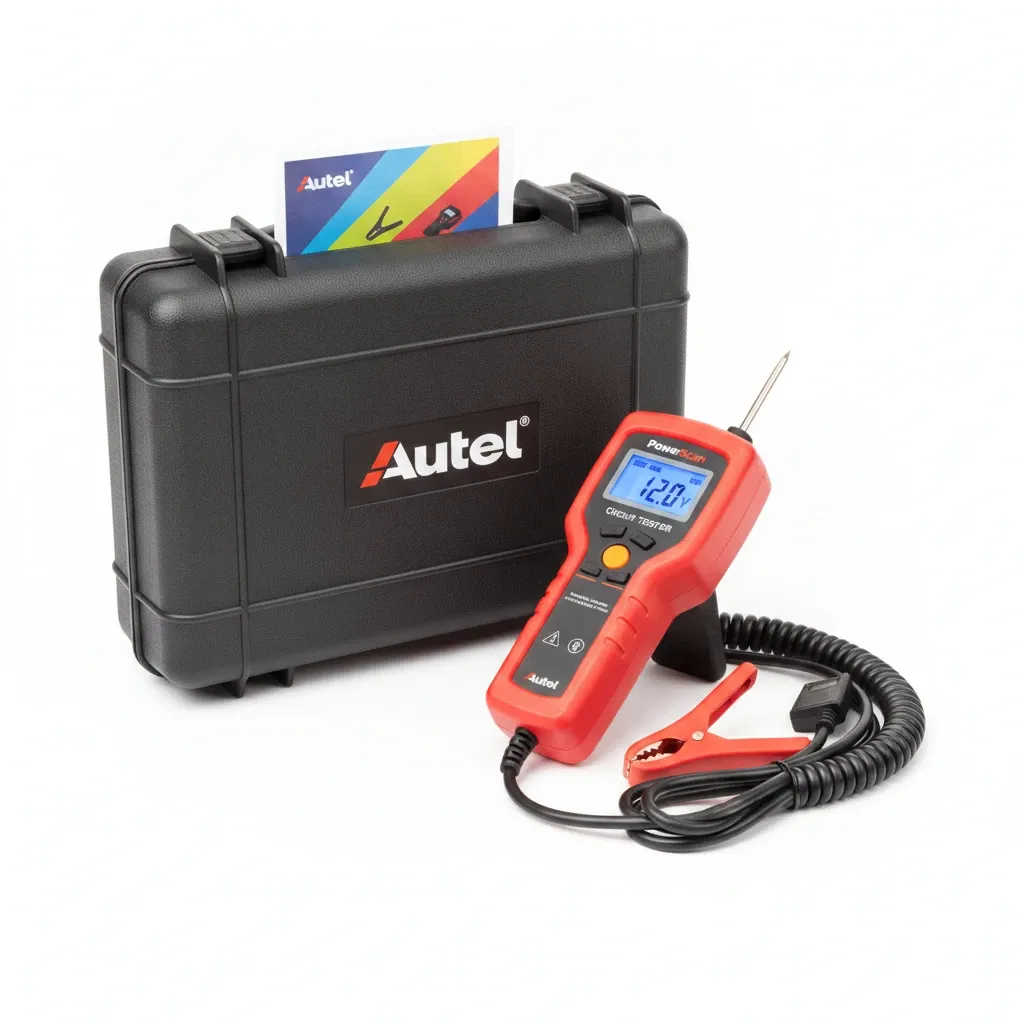
Short answer: A 12V 24V circuit tester is an automotive electrical diagnostic tool for checking power, ground, polarity and circuit behaviour on cars, vans, trailers and commercial vehicles. It is useful for UK mechanics and mobile technicians who move between 12-volt passenger vehicles and 24-volt light commercial or heavy-duty systems.
A good circuit tester is faster than a basic bulb test light and more practical than a multimeter for some fault-finding tasks. The important buying point is safety and suitability: the tool must be designed for vehicle low-voltage systems, have overload protection, and be used within the vehicle manufacturer's procedure. It is not a mains electrical tester and it is not for electric-vehicle high-voltage orange cabling.
What does a 12V 24V circuit tester do?
A 12V 24V circuit tester connects to the vehicle battery and uses a probe to check whether a point in the circuit has power, ground or an open condition. Advanced power probe style testers can also activate suitable components briefly, trace voltage drops, check continuity and help identify bad earths.
This makes the tool useful for lighting faults, trailer sockets, horns, relays, pumps, fans, switches, fuses and simple accessory circuits. It can shorten diagnosis because the technician sees power and polarity at the point of the fault instead of guessing from symptoms alone.
Why dual-voltage matters in the UK
Most cars and many vans use 12V systems. Many HGVs, buses, plant machines, recovery vehicles and some commercial equipment use 24V systems. A dual-voltage tester lets a workshop or mobile technician move between both without carrying separate tools.
Voltage support does not mean every circuit is safe to energise. Modern vehicles include sensitive ECUs, airbag circuits, CAN bus wiring, sensors and, on hybrid or electric vehicles, high-voltage systems that require specialist training and manufacturer information. Use the tester only where it is appropriate for the circuit.
Circuit tester vs multimeter vs basic test light
| Tool | Strength | Limitation |
|---|---|---|
| Basic test light | Quickly shows whether voltage is present. | Limited information and can load sensitive circuits incorrectly. |
| Digital multimeter | Accurate voltage, resistance and continuity measurement. | Slower for repeated probing and component activation. |
| 12V 24V circuit tester | Fast polarity checks, power/ground indication and low-voltage circuit testing. | Must be used carefully and only on suitable automotive circuits. |
| Diagnostic scan tool | Reads modules, live data and fault codes. | Does not physically prove power, ground or wiring integrity at the component. |
Features worth paying for
Overload protection: A resettable circuit breaker or protected output is essential when a tool can apply power or ground. It helps protect the tool and reduces the chance of damaging a circuit after a mistake.
Clear polarity indication: Bright, obvious power and ground feedback saves time in poor light and under dashboards.
Long lead: A 20ft lead is useful when working from the battery to rear lights, trailer sockets, tailgates and load areas.
Voltage range: Confirm the tool is designed for both 12V and 24V vehicle systems if you work on mixed fleets.
Build quality: Look for robust clips, strain relief, a tough probe tip and leads that remain flexible in cold UK weather.
Where it helps most
- Checking whether a bulb holder, motor or relay has power and ground.
- Finding bad earths on trailers, rear lights and accessories.
- Testing fuses and supply points quickly during fault tracing.
- Confirming switch outputs on suitable low-voltage circuits.
- Momentarily activating appropriate loads when the wiring diagram and circuit design allow it.
Safety boundaries for buyers
Do not use a 12V 24V circuit tester on UK mains wiring, household circuits, EV high-voltage systems, orange cables, airbag wiring or unknown control-module circuits. If a vehicle is hybrid, electric, collision damaged or has high-voltage warning labels, follow manufacturer guidance and use a qualified technician.
Before applying power or ground with a probe, identify the circuit, check the wiring diagram, confirm the load is suitable, and avoid back-feeding ECUs or data lines. Automotive batteries can deliver very high current, so keep metal tools away from battery terminals and stop if leads, clips or insulation are damaged.
Quick buying checklist
- Confirm the tester supports both 12V and 24V vehicle systems.
- Choose a model with overload protection or a resettable circuit breaker.
- Look for clear power, ground and polarity indicators.
- Pick a long enough lead for vans, trailers and rear vehicle circuits.
- Make sure the probe and clips feel tough enough for workshop use.
- Avoid tools that encourage applying power without clear protection and instructions.
FAQ
Can a 12V 24V circuit tester replace a multimeter?
No. It is faster for many vehicle fault-finding jobs, but a multimeter is still better for accurate measurement, sensor checks and resistance testing where precision matters.
Can it test bad earths?
Yes, a suitable circuit tester can help identify poor grounds by showing ground presence and circuit behaviour. Voltage-drop testing with a multimeter may still be needed for a complete diagnosis.
Is it safe to power components with the probe?
Only on suitable low-voltage automotive loads, and only when you understand the circuit. Do not power ECUs, airbag circuits, data lines or unknown wiring.
Can I use it on a lorry or van?
Yes, if the tool is rated for the vehicle voltage. Many commercial vehicles use 24V systems, so dual-voltage support is a key feature for mixed-fleet work.
Is it for electric vehicles?
It may be used only on suitable 12V auxiliary circuits when the procedure allows it. It must not be used on EV high-voltage systems or orange cabling.
Final buying advice
For UK workshops, recovery operators and serious DIY users, a protected 12V 24V circuit tester is a time-saving tool for low-voltage vehicle diagnostics. Choose one with dual-voltage support, clear indicators, a long lead and proper circuit protection, then use it alongside wiring information and a multimeter rather than as a shortcut around safe diagnosis.
Ready to speed up your fault finding with CircuitTest Hub?
Equip Your Workshop — £150.72