Component Activation Tester Explained: A UK Buyer's Guide
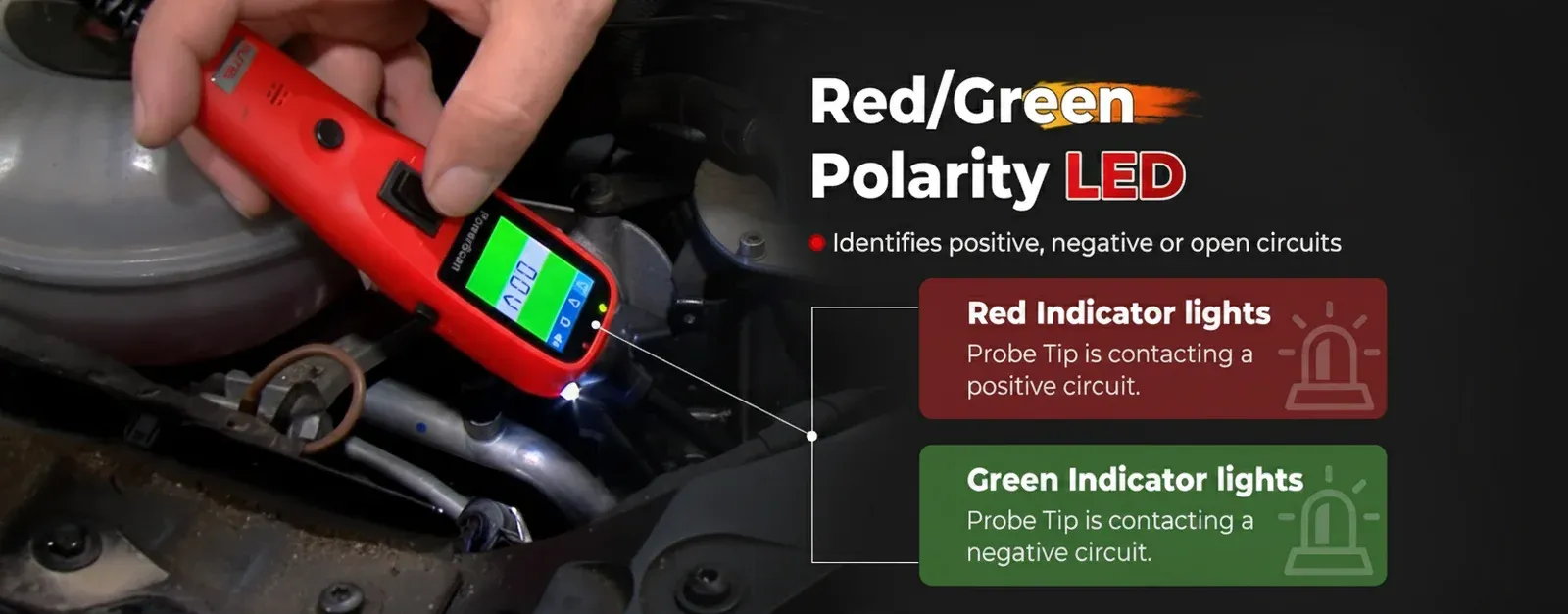
TL;DR: A component activation tester is a handheld electrical diagnostic tool used to supply direct power or ground to vehicle components like fuel pumps, relays, and radiator fans. Consequently, it helps technicians instantly identify whether a part is physically broken or if the fault lies in the wiring, saving hours of diagnostic time on 12V and 24V UK fleet and passenger vehicles.
A component activation tester is an essential diagnostic device that applies direct battery voltage or ground to a specific vehicle component, allowing you to quickly determine if the part is faulty or if the issue stems from the wiring and control circuit. A fault code can point you in the right direction, but it rarely tells the whole story. For instance, when a radiator fan will not run, a fuel pump stays silent, or a relay-controlled circuit behaves intermittently, the real question is simple: is the component faulty, or is the wiring and control side at fault? Therefore, that is exactly where a component activation tester earns its place in a UK workshop, fleet bay, roadside van, or plant maintenance kit.
Based on our testing at CircuitTest Hub, for technicians working on 12V and 24V systems, the true value of this tool is speed. Furthermore, a handheld tool that can supply power, verify ground, check continuity, and activate components directly can cut diagnostic time dramatically. CircuitTest Hub positions this clearly: it is the ultimate short circuit tester for UK professionals, built to help diagnose 12V and 24V electrical faults in half the time. In practice, component activation is one of the most useful functions because it helps separate a failed part from a failed circuit before unnecessary replacement costs pile up.
This guide explains what a component activation tester does, who needs one, what features matter in the UK market, and how to choose a tool that suits professional fault-finding rather than occasional guesswork.
Key Takeaways
- A component activation tester sends controlled power or ground to a component so you can confirm whether it operates independently of the vehicle’s command circuit.
- It is especially useful for testing fans, relays, motors, lamps, solenoids, injectors, and pumps on 12V and 24V systems.
- For UK professionals, the best tools combine activation, continuity checks, polarity testing, short-circuit tracing, and long cable reach in one handheld unit.
- Choosing the right tester can significantly reduce diagnostic time, avoid misdiagnosis, and limit unnecessary parts replacement.
- If you want broader context on multi-function diagnostic probes, read The Ultimate Guide to Autel Powerscan PS100 in the UK.
What does a component activation tester do?
A component activation tester is a handheld electrical diagnostic tool designed to apply battery voltage or ground directly to a vehicle component in a controlled way. Ultimately, its primary purpose is to confirm whether that component responds as it should. If it does, the fault often lies elsewhere in the circuit, such as wiring, connectors, switches, relays, fuses, or control modules.
Unlike a basic test lamp or a standard multimeter, a component activation tester is built for live circuit diagnosis. Specifically, it typically connects to the battery, gives the user an extended lead to reach around the vehicle, and offers immediate indication of polarity, continuity, and switchable output. On a modern tool, that means you can power a window motor, trigger a relay, energise a solenoid, or verify a lamp circuit directly from one device.
As a result, that makes it particularly valuable in busy UK workshops handling mixed vehicle types, from private cars and vans to agricultural machinery, ambulances, recovery trucks, and other 24V commercial applications.
How do you use a component activation tester for fault-finding?
The principle is remarkably straightforward. First, the tester is connected to the vehicle battery, then the probe tip is placed at the component feed or ground side. Subsequently, the operator can identify whether the circuit already has voltage, whether ground is present, and in many cases, command the tester to send power or ground to the target component.
How to test a radiator fan?
If a cooling fan does not run, there are several possible causes: a failed motor, a bad relay, broken wiring, a poor earth, a blown fuse, or a control issue from the ECU. With a component activation tester, however, you can apply power directly to the fan motor. If the fan runs strongly, the motor itself is likely serviceable. Consequently, your attention then moves to the command side of the circuit.
How do you test a fuel pump?
On a no-start fault, directly activating the pump can quickly show whether the pump is physically capable of running. If it responds, the issue may sit with the relay, immobiliser logic, wiring resistance, or module control. Conversely, if it does not respond under proper test conditions, the pump or its direct supply path becomes the prime suspect.
Can you test relays and solenoids?
Yes, relays and solenoids are ideal candidates for activation testing. You can often hear or feel operation immediately upon applying power. As a result, that gives fast confirmation without dismantling large sections of trim or spending extra time chasing the wrong branch of the circuit.
Why is a component activation tester essential for UK mechanics?
Electrical faults are notoriously expensive because they consume massive amounts of labour time. The Office for National Statistics regularly reports rising labour costs across the UK economy, and workshop time remains one of the biggest cost drivers in repair work. Therefore, a tool that shortens diagnosis is not just convenient; it protects margin and improves throughput.
According to UK automotive industry guidelines and reports from the Institute of the Motor Industry (IMI), there is a practical skills gap across the wider motor trade as vehicle technology becomes increasingly complex. In that environment, tools that simplify and speed up electrical diagnosis are incredibly important for technicians at every experience level.
For NHS fleet workshops, local authority transport units, independent garages, mobile auto electricians, and plant engineers, downtime carries a real operational cost. If a van, support vehicle, or service unit is off the road while an intermittent circuit fault is guessed at rather than tested properly, the business impact can outweigh the part cost many times over.
Ultimately, a component activation tester helps by making diagnosis far more decisive. Instead of asking whether a component might be faulty, you can often prove whether it will operate under direct command within seconds.
What components can you test with an activation tester?
Based on our testing at CircuitTest Hub, the exact list depends on the specific tool and the vehicle, but a capable tester can be used on a wide range of vital circuits.
- Cooling fan motors
- Fuel pumps
- Window motors
- Wiper motors
- Headlamp and lamp circuits
- Horn circuits
- Relays
- Solenoids
- Trailer lighting circuits
- Starter control circuits
- Earth points and continuity paths
Furthermore, on 24V systems, the same logic applies, but the tester must be designed for commercial vehicle voltage ranges. This matters significantly in the UK because many workshops do not only see passenger cars. Light commercials, HGV-related support vehicles, agricultural equipment, and specialist fleet vehicles all bring entirely different electrical demands.
Finally, if you are comparing broader probe-style testers rather than activation alone, our guides on vehicle circuit testers and 12V 24V circuit testers give useful context on all-in-one diagnostic tools.
Ready to speed up your fault finding with CircuitTest Hub?
Equip Your Workshop — £150.72