Vehicle Circuit Tester Explained: A UK Buyer's Guide
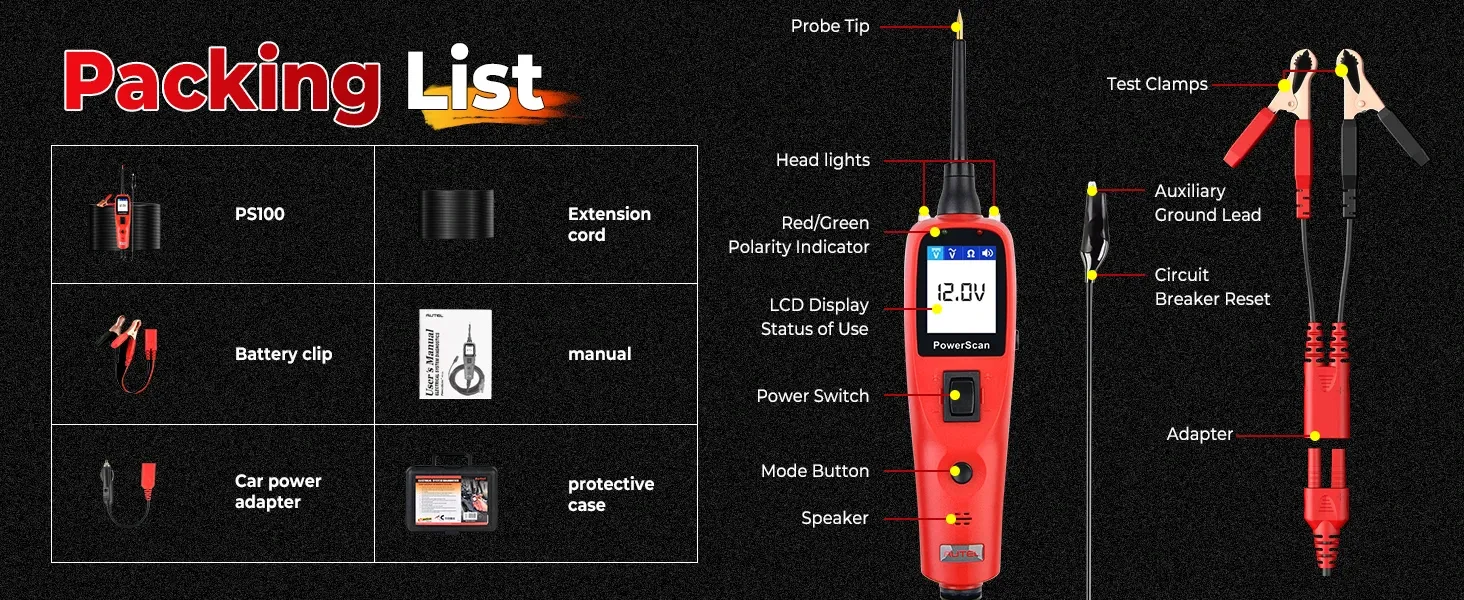
A vehicle circuit tester is a handheld diagnostic tool used to check power, earth, continuity and component operation in a car, van or lorry electrical system. It helps you find wiring faults faster than a basic test light and, in many cases, more practically than a standard multimeter—especially on modern 12V and 24V vehicles used in the UK.
TL;DR: If you need to diagnose automotive electrical faults, a vehicle circuit tester lets you quickly identify live feeds, bad earths, broken wires, shorts and faulty components. Based on our testing of workshop-style units, the best options combine voltage reading, audible power/ground alerts, safe component activation and built-in short-circuit protection for use on modern UK vehicles.
Key Takeaways
- A dedicated vehicle circuit tester combines the functions of a multimeter, test light and power probe into one handheld unit.
- Advanced testers allow for safe component activation without running jumper leads from the battery.
- Choosing a tool compatible with both 12V and 24V systems is essential for UK workshops handling passenger cars and commercial fleets.
- Built-in short-circuit protection helps prevent damage to sensitive vehicle ECUs during active testing.
What is a vehicle circuit tester?
A vehicle circuit tester is an automotive electrical diagnostic tool designed to evaluate the condition of wiring and components. In practice, it helps you confirm whether a circuit has power, whether an earth connection is sound, whether continuity is present and whether a component can be activated directly for testing.
Unlike a standard digital multimeter, which often requires you to keep looking back at a display, many modern circuit testers provide immediate visual and audible feedback. As a result, technicians can work faster when tracing faults behind dashboards, in engine bays or around fuse boxes.
Crucially, many modern active circuit testers also let you inject voltage or ground directly into a circuit. Therefore, you can test cooling fans, window motors, relays and fuel pumps at the component itself. This quickly shows whether the problem is in the wiring loom or within the component.
How does a vehicle circuit tester work?
A vehicle circuit tester works by connecting to the vehicle battery and then using a probe tip to test individual wires, terminals and components. Depending on the model, it can detect battery voltage, verify earth paths, test continuity and apply power or ground to activate circuits safely.
How passive testing differs from active testing
Historically, mechanics relied on passive tools. A traditional 12V test light simply illuminated when it found power. However, using an old-style incandescent test light on modern vehicles can be risky because current draw may damage sensitive control modules or interfere with safety systems.
By contrast, today’s active vehicle circuit testers are designed for modern diagnostics. They draw minimal current when checking signals but still offer enough capability to power up suitable components when needed. Consequently, they are far more useful for current-generation vehicles with multiple ECUs and complex wiring networks.
Why use a vehicle circuit tester instead of a test light or multimeter?
A vehicle circuit tester is often quicker and more versatile than either a basic test light or a multimeter when diagnosing automotive wiring faults. For example, it can give instant audible confirmation of power or earth while also allowing direct component activation from one handheld device.
Based on our testing of professional-style units commonly used in garages, this saves significant time during fault-finding on lighting circuits, relays, motors and intermittent wiring issues. In addition, it reduces the need to swap between multiple tools during diagnosis.
When it beats a standard test light
A basic test light may show that power exists at one point in the circuit. However, it cannot usually confirm bad-earth conditions properly or activate components for isolation testing. More importantly, some older lights are unsuitable for sensitive electronic systems found in newer vehicles.
When it beats a multimeter
A multimeter remains useful for detailed measurement work. Even so, for day-to-day workshop diagnostics, many technicians prefer the speed of an all-in-one probe-based tool with built-in tones and direct actuation features.
Why are vehicle circuit testers especially useful in the UK?
The UK driving environment creates specific electrical reliability problems. Heavy rain, winter road salt, freezing temperatures and damp storage conditions all contribute to corrosion in wiring looms, poor earth points and moisture ingress into connectors. As a result, intermittent faults are common.
According to DVSA MOT guidance categories covering lamps, reflectors and electrical equipment, electrical defects remain one of the most common reasons vehicles fail inspection. Therefore, being able to diagnose these faults quickly matters for both private owners and busy workshops.
Furthermore, this need extends beyond passenger cars. Mobile mechanics and fleet technicians may need to move from a hatchback to an NHS support van or an HGV in the same day. Therefore, choosing a professional-grade tool that supports both passenger vehicles and commercial systems is vital. A robust 12V and 24V circuit tester makes that transition far easier.
What features should you look for in a vehicle circuit tester?
Not all testers offer the same level of safety or capability. If you are buying for workshop use in Britain, several features make a noticeable difference in real-world fault-finding speed and reliability.
Power and earth verification with audio tones
A strong unit should provide distinct audio tones for positive voltage and ground. This is especially helpful when working under dashboards or inside footwells because you do not need to keep checking the display visually.
Safe component activation
The ability to apply battery voltage or ground directly is one of the biggest advantages of an advanced tester. It allows you to bypass switches and sections of loom so you can quickly isolate whether the fault lies in control wiring or in the component itself. If you want more detail on this function specifically, see our guide to the component activation tester.
Built-in short-circuit protection
This feature is essential on modern vehicles. If you accidentally apply voltage into a shorted path, an internal auto-resetting breaker helps protect both the tool and the vehicle wiring from damage. Consequently, active testing becomes much safer for everyday use.
Bad-earth indication and continuity testing
Poor earths cause many hard-to-trace faults including dim lamps, erratic sensors and intermittent module behaviour. A high-quality tool should highlight weak grounding clearly so you can pinpoint corrosion or loose chassis connections without unnecessary disassembly.
12V and 24V compatibility
If your work includes vans, plant equipment or HGVs alongside cars, dual-voltage capability is important. In other words, one tool should be able to cover common UK passenger car systems as well as commercial applications where appropriate.
Ready to speed up your fault finding with CircuitTest Hub?
Equip Your Workshop — £150.72