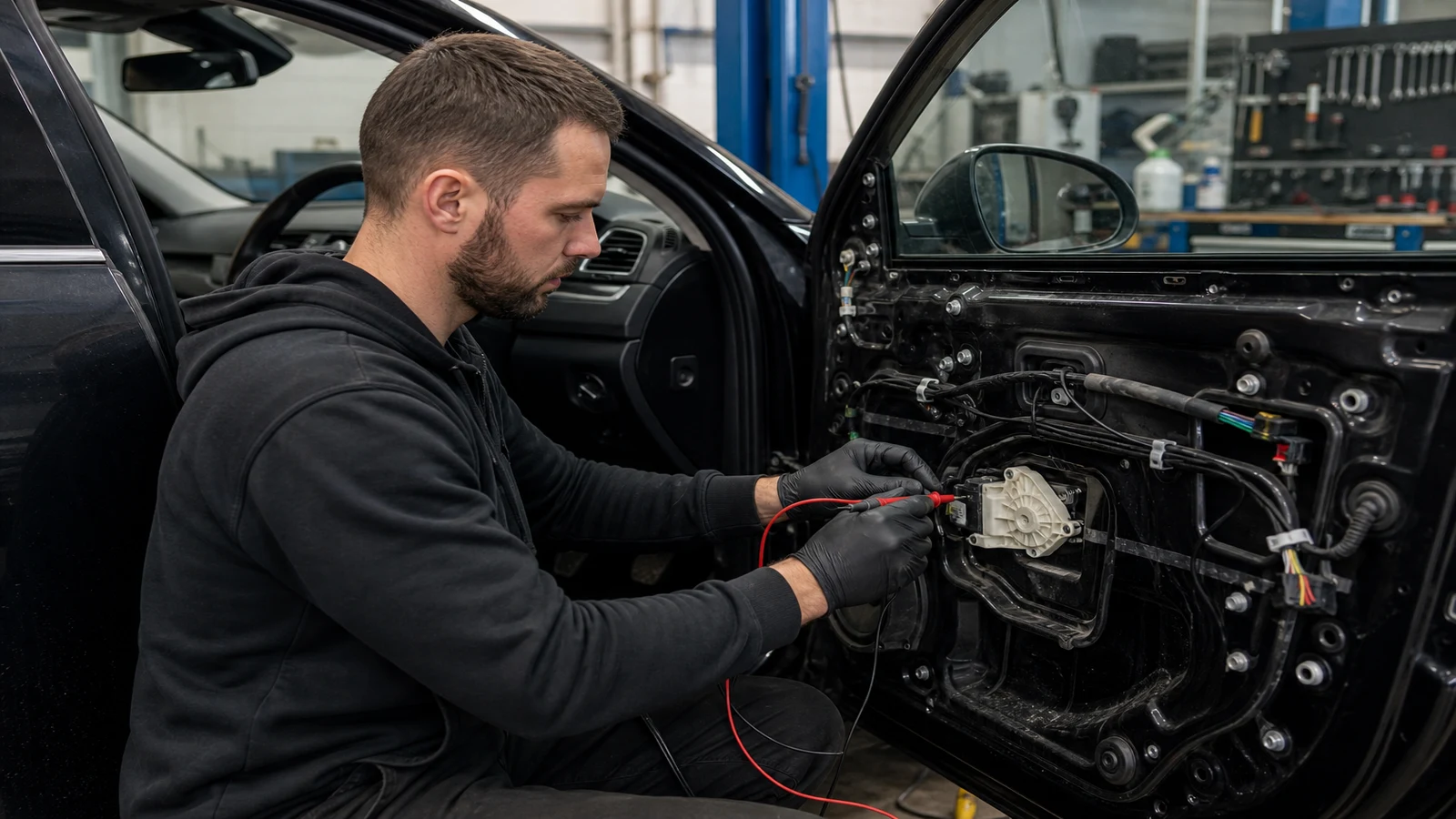
Window Regulator Motor Power Test for UK Driveway Diagnosis
Short answer: a window that will not move needs checks for switch input, fuse supply, wiring, earth and motor operation before parts are replaced. Keep fingers clear of the regulator, avoid shorting live wires, and stop if the door contains side-airbag wiring or unfamiliar modules.
Driveway car electrical checks should be methodical and low-risk. Start with visible faults and measurements before applying power or disturbing control modules.
Separate mechanical jam from electrical fault
Poor earths often show up as dim lamps, slow motors, odd warning behaviour or faults that change when another load is switched on. Corrosion and loose fixings are common first checks.
Check fuses, switch and wiring first
A multimeter is the safer first-pass tool because it measures voltage, resistance or voltage drop without feeding power into a wire. A power probe can be useful, but only when the circuit is identified.
Testing motor power and earth carefully
Voltage drop testing compares what the circuit should receive with what it receives under load. It can reveal resistance in an earth path without guessing at parts.
Why door looms and modules complicate diagnosis
For MOT lighting faults, start with bulbs, holders, fuses, connectors and earth points before chasing modules. Avoid bridging wires blindly.
Safe reassembly after testing
Keep clear of moving fans, window regulators and airbag wiring. Hybrid and EV systems, high-current circuits and module wiring need a qualified technician.
Quick buying checklist
- Start with visual corrosion, loose earths and damaged connectors.
- Use a multimeter before applying power.
- Do not power-feed unknown module wires.
- Keep hands clear of motors and fans during checks.
- Use an auto electrician for safety systems or high-current faults.
FAQ
Is this a job for a beginner?
Some visual checks are beginner-friendly, but electrical, LPG, buried-service and car diagnostic work can become unsafe quickly. Stay with inspection-level checks unless you are competent and have the right equipment.
What should I check before buying a tool or accessory?
Check the product instructions, the job you actually need to do, and whether the item matches your vehicle, appliance, clothing use, garden system, brew-day setup or burner arrangement. If the fit or rating is unclear, pause rather than guessing.
Final buying advice
A good first pass identifies whether the fault is supply, earth, load or control. If you cannot name the circuit, do not energise it.